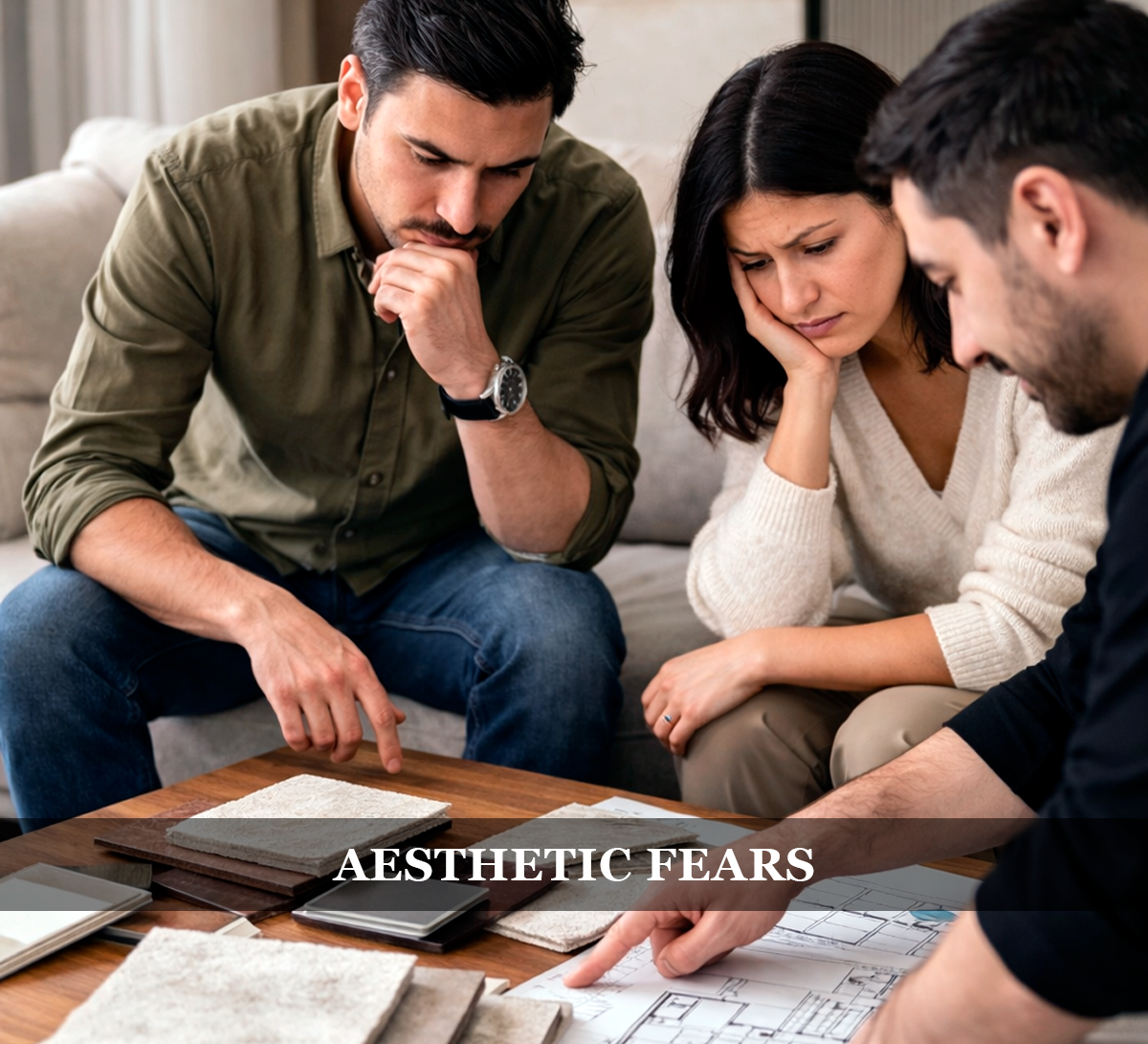
The Fear Beneath The Surface
Many homeowners feel this way, but very few say it out loud. The questions often sound like this:
- What if the designer’s vision quietly takes over mine?
- What if I say yes to something because it sounds sophisticated, even though it doesn’t sit right with me?
- What if everyone else loves how it looks, but I never fully relax in it?
You might find yourself scrolling through stunning homes online and thinking, “This is beautiful… but would I actually feel at home here?” There’s the worry that a colour might feel too loud once you’re living with it, or that a finish that looked perfect in a sample might feel cold in real light. Some people fear their home will date too quickly; others worry it will feel timeless but emotionally distant—impressive to look at, but hard to truly inhabit.
Both fears are valid. Because a home should never feel like a choice between looking beautiful and feeling like it belongs to you.
Design That Listens First
In our work, design isn’t about putting a signature stamp on your home. It’s about stepping into your story and helping shape spaces that feel honest, lived-in, and intuitive—not staged or intimidating.
That means the process starts well before any drawings or moodboards appear. The first step is always spending time understanding how you actually live: your routines, what you value, how you move through your space, and where you feel most at ease.
Those early conversations aren’t about aesthetics alone—they’re about alignment. They help us understand your expectations, comfort levels, and hesitations, especially the ones that are hard to put into words.
From there, we use carefully thought-through questionnaires—not just checklists, but tools to decode what you’re naturally drawn to, what you want to avoid, and how you hope your home will feel on a daily basis. This ensures that when we talk about “good design,” we’re really talking about what feels right for you, not a generic ideal.
Then ideas turn into layouts, material palettes, references, and visualisations that let you see and sense the direction early on. At each stage, your feedback isn’t treated as a formality; it’s actively invited and genuinely needed. The goal is for you to feel involved, informed, and heard—never like decisions are happening around you.
When Hesitation Becomes Confidence
Back to that client and the suspended bar unit.
Instead of pushing ahead, we walked him through the intent behind the design over a couple of conversations—why it was placed where it was, how it would feel to move around it, and how it might evolve as his lifestyle changed. We prepared detailed drawings, shared material samples he could touch and see in different light, and even created a small mock-up so he could experience the idea before committing.
That extra step changed everything. What started as hesitation gradually shifted into curiosity, and eventually into real excitement.
Today, that bar unit is one of his favourite parts of the home—a feature that not only defines the living space but also sparks the first conversation when guests walk in.
Moments like this remind us that aesthetic confidence doesn’t come from designers insisting they’re right. It comes from giving you the time, tools, and space to feel equally confident in the choices being made.